
In the first person
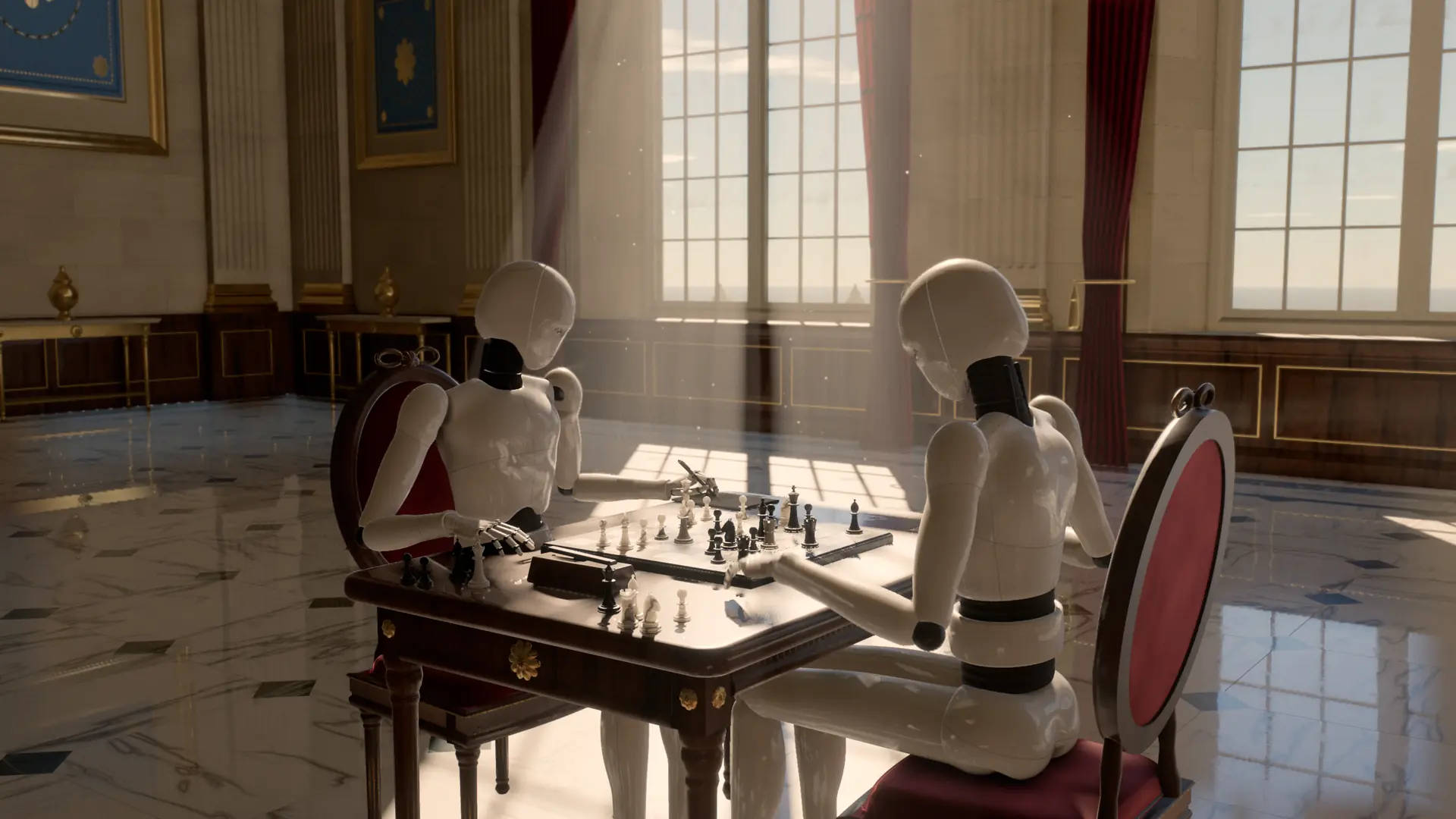
You see through your robot's eyes: look around the hall, lean over the board, look up at your opponent, glance at your scoresheet, or stand and walk to an end of the table.
Version 1.0.0
The Royal Game
Take your seat at a waxed walnut table in a sunlit royal hall. Across the board, a porcelain robot driven by Stockfish waits for your first move.
Captured in the game: the royal hall
IThe experience
Scacelith brings back what makes a real game: the hall, the silence, the clock, an opponent who looks at you, and the rituals of the tournament.
You see through your robot's eyes: look around the hall, lean over the board, look up at your opponent, glance at your scoresheet, or stand and walk to an end of the table.
A piece you touch must be moved, and your hand presses the clock to complete the move. With the move hints off, the arbiter penalises an illegal move, and a second one loses the game.
Both players record every move on their own scoresheet, each in a handwriting of their own, and turn the page every forty moves. You hear the pen on the paper.
Stockfish 19 at your level, from Novice (800) to Stockfish Max (3500), with a rating computed by the FIDE rules after every game.
An engine written from scratch: physically based light, marble, waxed wood, porcelain and brass, the sun through the windows, soft shadows and reflections. Quality presets, from Very low to Ultra, fit it to your graphics card.
English, French, German, Spanish, Portuguese from Portugal and Brazil, Italian, Dutch, Swedish, Danish, Finnish, Estonian, Latvian, Lithuanian, Polish, Czech, Slovak, Slovenian, Croatian, Hungarian, Romanian, Bulgarian, Greek, Turkish, Ukrainian, Russian, Arabic, Hindi, Indonesian, Vietnamese, Korean, Japanese and Chinese, simplified and traditional. Arabic is laid out right to left, and the coach speaks aloud in every language except Chinese, where its words appear as subtitles.
IIWays to play
Everything is played in the same hall, from the title screen. Offline, Stockfish is always ready for a game.
Face Stockfish at the strength of your choice, with a time control from bullet to classical, or play a friend on the same computer, each from their own robot's eyes.
A teacher sits across from you, plays at your level and talks you through the game: threats, good moves, mistakes, playing out with its own hand what a mistake costs. From the rules of chess to expert level, with a voice synthesised on your computer.
Short sets of positions, each training one skill: mates in one to three, forks, pins and other tactics, defence, and the basic endgames against the coach. Hints only when you ask, and a green check for every set you complete.
Stockfish reviews your saved games, your online games or any PGN: an evaluation bar, the key moves marked from brilliant to blunder, the better move drawn as an arrow, and comments aloud and in subtitles. The robots' hands play the moves as you step through.
Real opponents through a Scacelith server: rated games, matchmaking, challenges and private games, or a direct match between two computers. Your opponent's robot moves with them, live.
Two Stockfish players face each other while you move freely around the hall, invisible, from one viewpoint to another.
Your games are kept as PGN files. Replay them in the hall, with the real thinking times and clocks, or bring in games from other programs.
IIIGallery
Every picture is captured in the game, in real time, by its own engine.
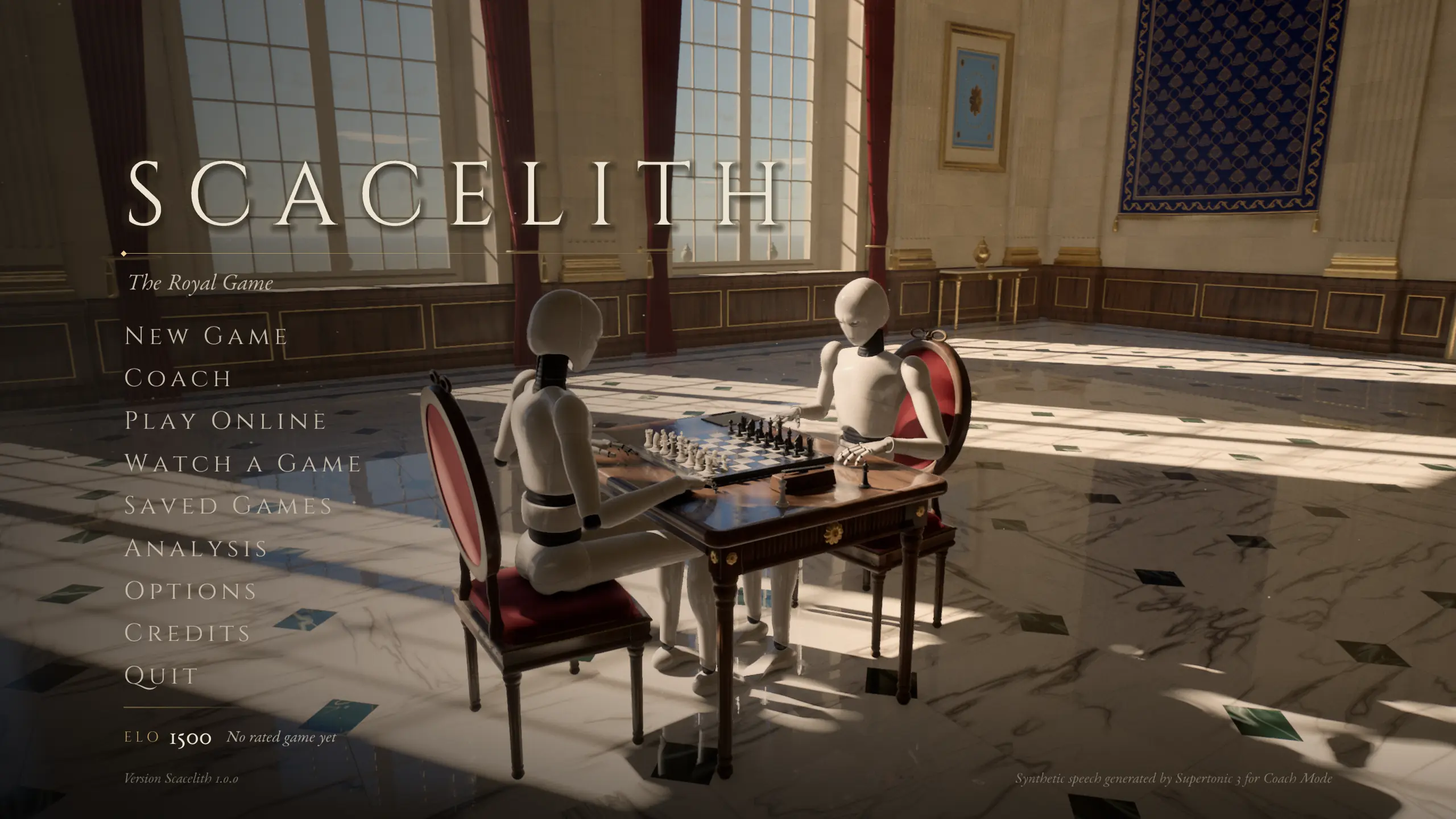 The title screen
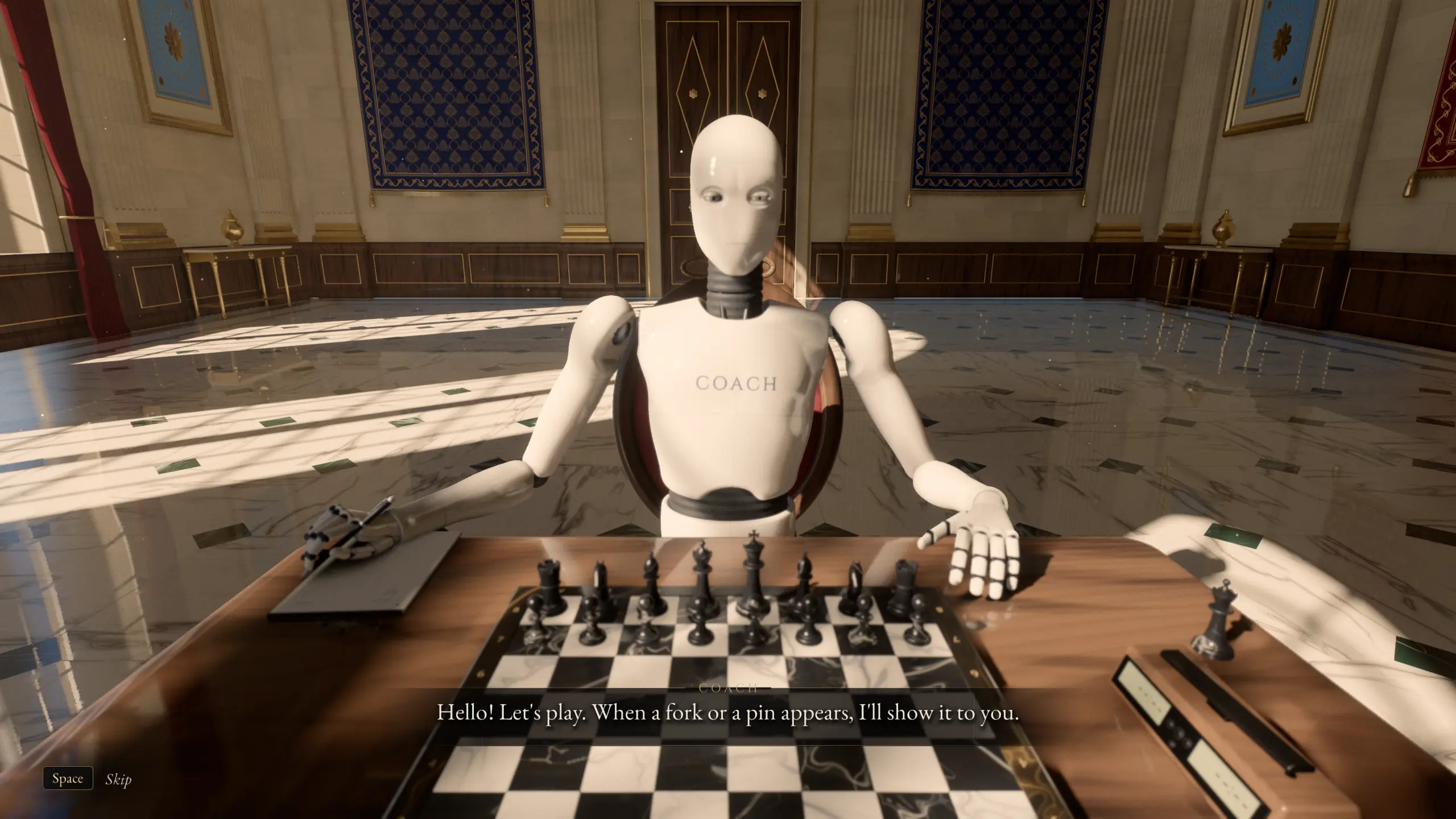 Coach
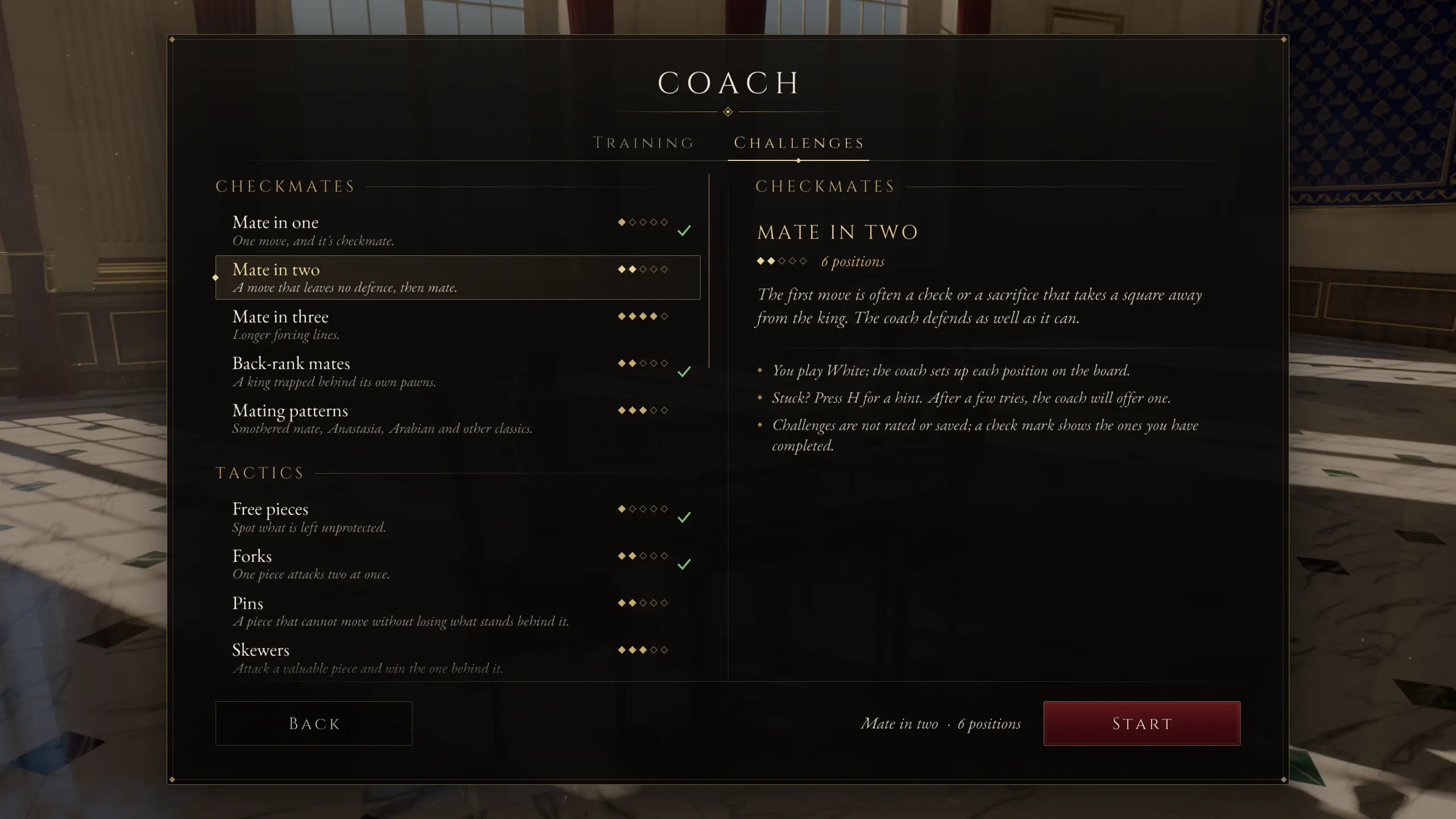 Coach Challenges
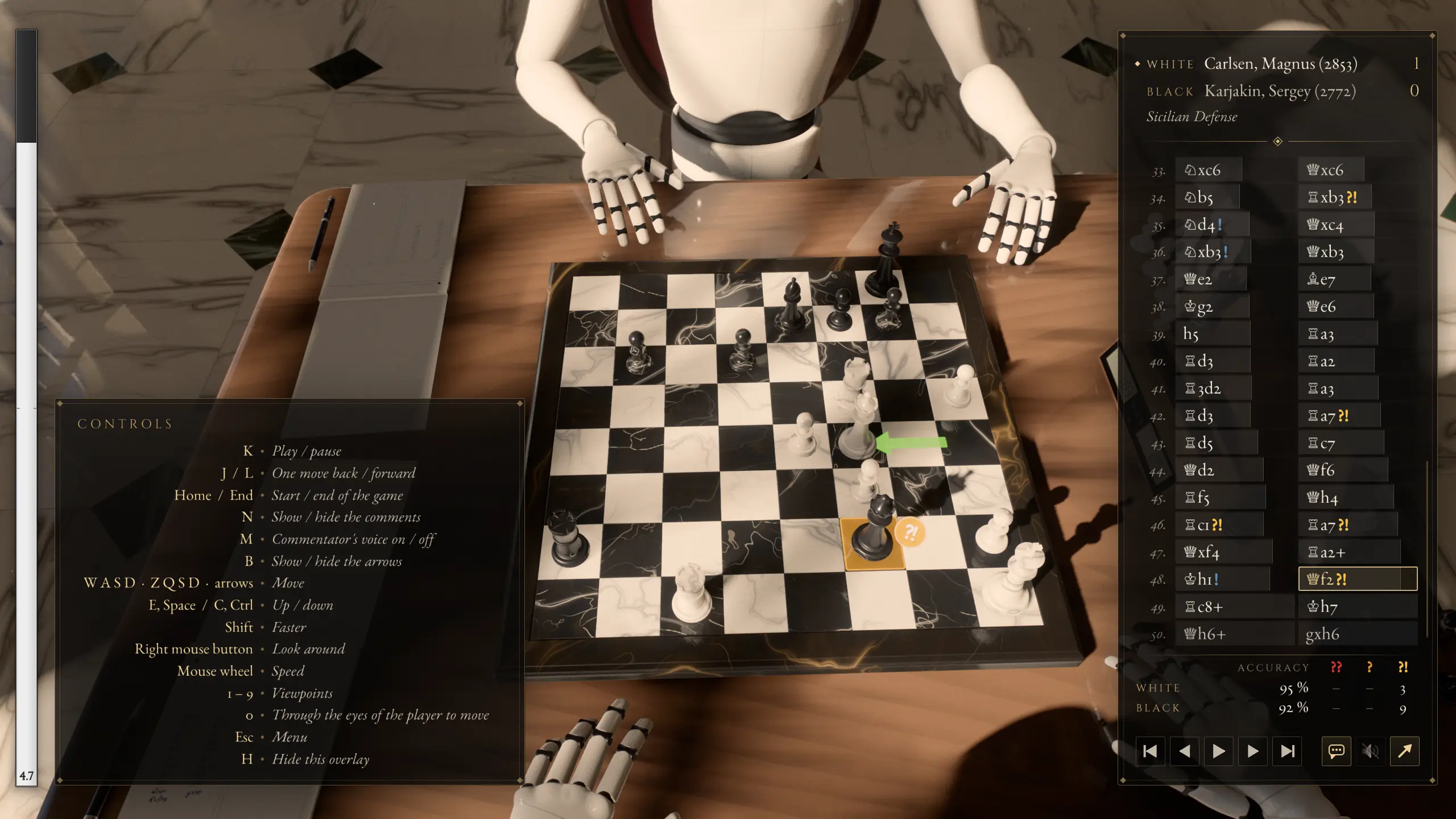 Analysis
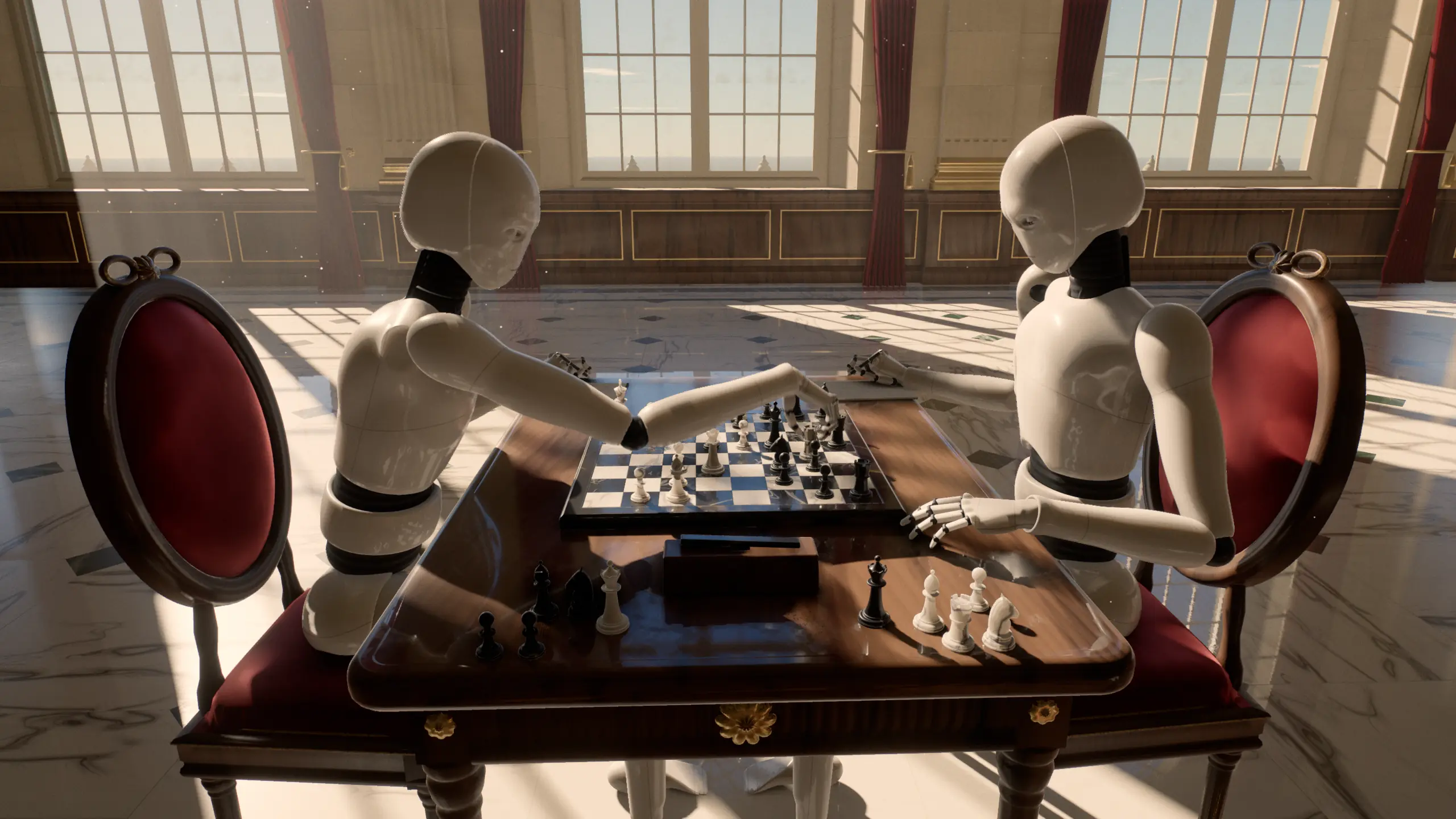 Watch a Game
 Your opponent
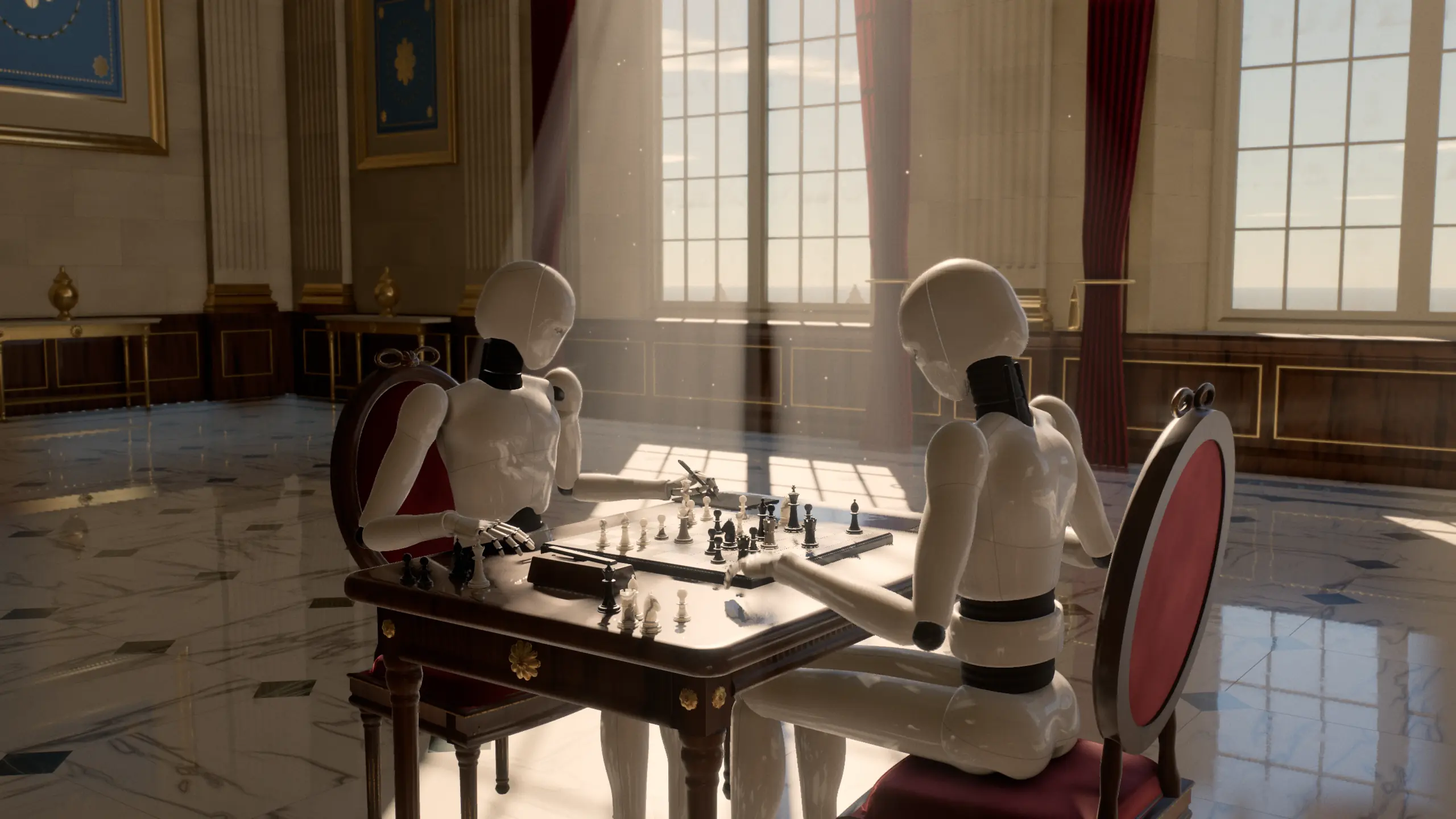 The royal hall
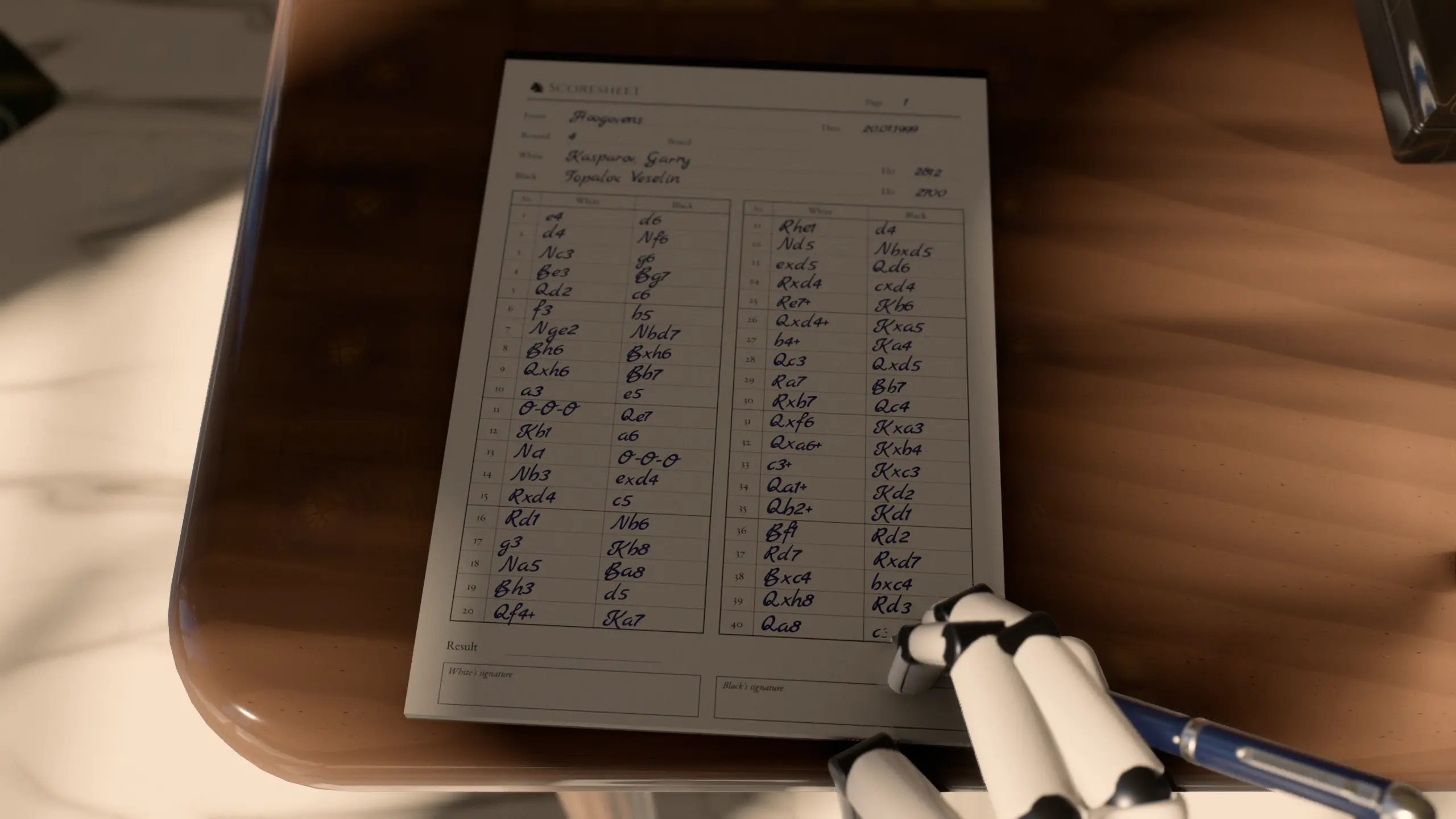 The scoresheet
Version 1.0.0. The interface in these pictures is in English.
IVTrailer
Nothing is loaded from YouTube until you accept its player. Watch on YouTube
VOnline
Sign in to the official server from the game and play people from everywhere, still in the first person.
VIDownload
Unpack and play: no installer on Windows or Linux, and a drag to Applications on a Mac. Every file is built from its tagged source by GitHub Actions, with an attested build provenance.
Scacelith
For Apple Silicon Macs (M1 or later) with macOS 26 or later, not in a virtual machine; newer and less tested than the other builds. The app is not signed by a registered Apple developer: the first time, open it from System Settings › Privacy & Security › Open Anyway.
Each file's build provenance is attested by GitHub. With the GitHub CLI:
gh attestation verify Scacelith-…-windows-x64.zip --repo DarkCenobyte/scacelith-chess
VIICredits
“Chess is the art of analysis.”